- Home
- Case Studies
- Low Direct Bookings & High OTA Dependency
Low Direct Bookings & High OTA Dependency
We help travel and hospitality brands grow direct bookings, cut OTA commissions, and build long-term customer relationships through smart digital strategies.

Overview
The increase in a hospitality business had placed a heavy dependency on the Online Travel Agencies (OTAs) to make the bookings, which led to high commission rates, insufficient control of the brands, and unreliable relationships with the guests. In spite of good occupancy, profitability was low as OTA fees keep rising and direct customer contact is not established.
The customer site was more of an informative one and not a sales one, which operates on a booking basis. Tourists used to leave without making reservations, and loyal clients used to reserve a room using other platforms. No apparent plan of attracting, converting, and retaining direct customers.
TryGaze Digital Solutions collaborated with the client to turn their digital ecosystem into a growth of direct booking engine.
Through optimization of websites, search engine optimization, performance marketing, and improvement of user experience, we assisted the brand to no longer depend on OTAs and gain control of bookings, data, and sustained revenue growth.
Challenge
Over 70 percent of the booking was being derived through OTAs resulting in high commission payments and minimal customer ownership.
Despite the traffic, the site did not have a persuasive design, definite booking directions, and aspects of trust, which lead to low conversions.
Customers who made reservations via OTAs do so over and over again, eliminating the chance of a repeat bookings and direct contact.
Lack of quality analytics and tracking could not help to easily quantify campaign performance, user behavior and booking drop-offs.
All these difficulties limited the growth of revenue, decreased profitability, and deteriorated brand sustainability in the long term.

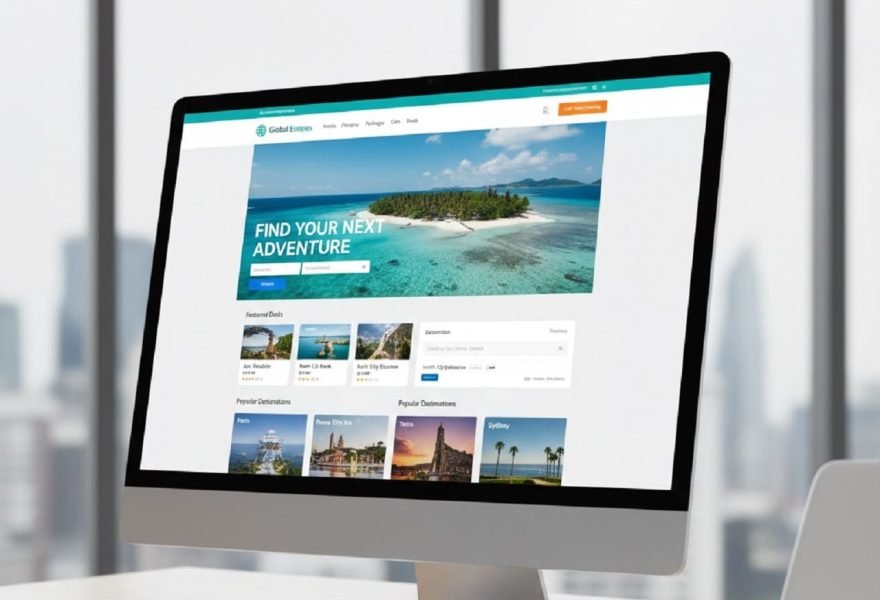
We Follow Below Resolution Process :
Technology - Website & Booking Engine Optimization
Organic Growth - SEO & Content Strategy
Paid Growth - Performance Marketing Campaigns
Optimization - Analytics & Retargeting Setup
Results & Conclusion
The hospitality brand experienced a remarkable change in the booking behavior within some months after the implementation. Direct website reservations were on the rise and minimized the reliance of OTA and enhanced the overall profit margins. The streamlined site optimized conversions among the visitors, particularly the mobile devices, which had a high percentage of traffic.
Key brand and destination specific key word visibility in the search engines also enhanced and enabled the business to gain demand earlier in the customer buying cycle- before the customers access OTA platforms. The performance marketing campaigns provided quality traffic that could be measured and their ROI and remarketing campaigns were able to recover lost bookings.
Above all, the client owned customer data once again to be able to communicate more appropriately, make repeat booking and long-lasting loyalty. Data-driven decision-making was realized with the right analytics as opposed to being purely assumption-based.
This case study shows how a digital strategy that combines technology, marketing, and user experience can be beneficial when it is well aligned to help travel and hospitality businesses to overcome the stage of OTA over reliance and create a sustainable model of direct revenue.
