Online advertising is an essential part of the success of the travel businesses today. Some of the strongest platforms are Meta Ads (Facebook and Instagram) and Google Ads. Both of them give innumerable opportunities to create leads and bookings-but they operate in entirely different ways. The best platform to use in traveling is dependent on what you want, how much you have, and how you are traveling.
We should discuss the comparison between Meta Ads and Google Ads and when each of them should be utilized.
Learning the Meta Ads about Travel Businesses
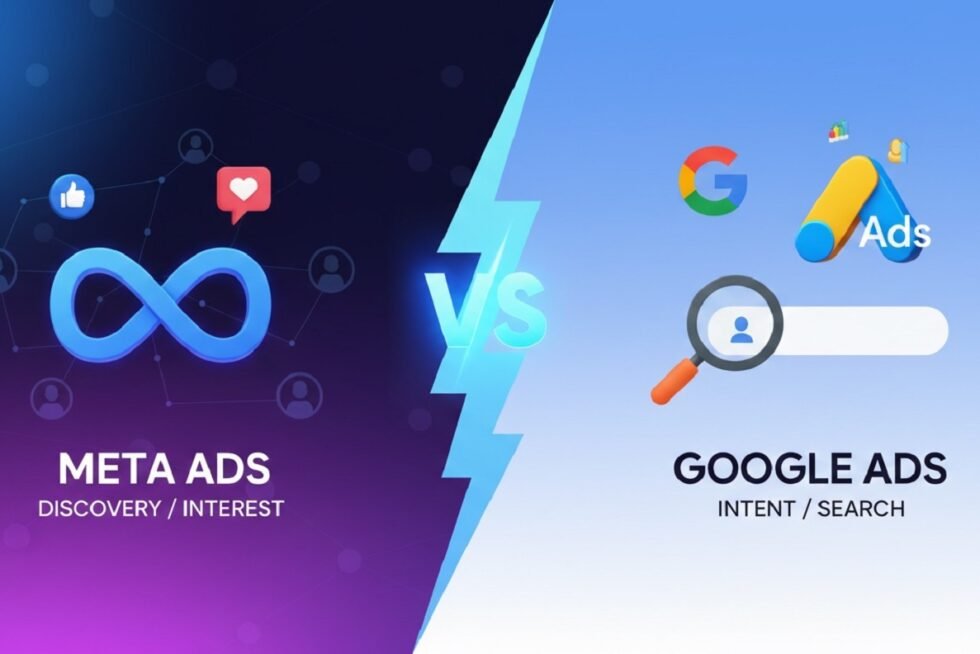
Meta Ads are geared towards discovery-based marketing. People who go through Facebook or Instagram are not necessarily on the verge of going somewhere but seeing images that are alluring can be inspirational.
The Meta Ads are effective in promoting travel businesses in cases where:
- Holiday packages and deals.
- The new destinations or experiences.
- Awareness and brand recognition.
- Remarketing former web users.
Visual images, brief videos, reels, and carousel advertisements are very effective. The sophisticated elements of audience targeting by Meta, which is built on interests, behaviors, demographics, and travel intent, is beneficial once a brand wants to get potential travelers to start their search engine before it begins.
Nevertheless, Meta Ads tend to produce leads based on interests that might need to be cultivated before being converted.
Learning the Google Ads in Travel Business
Google Ads is search intent driven. When a person goes to the search engine and types the words and questions best wildlife safari in India or book hotel near Dudhwa National Park, he/she is already going to perform.
Google Ads works best for:
- Direct reservations and requests.
- High-intent keywords
- Local searches and destination-specific searches.
- Immediate lead generation
Search advertisement puts your travel company on the first page of Google, reaching the demand when people are willing to make a reservation. This tends to increase the conversion rates as compared to social media advertisements.
The disadvantage is an increase in competition and the price per click in destinations of travel demand.
Meta Ads and Google Ads: Major Disagreements
The key distinction is the intent of the user. Demand is generated by showing Google Ads to users actively searching and Meta Ads to potential travelers.
Meta Ads are graphical and are good to tell stories. The Google Ads are textual in nature and conversion oriented. Meta is comparatively cheaper per click, and Google offers high quality of leads.
Which Platform is the best in Travel?
It cannot be answered in a single size fits all. The most successful travel brands utilize the two platforms in a strategic manner.
Use Meta Ads when:
- Introduction of new destination or tour.
- Building brand awareness
- Running seasonal campaigns
- Remarketing web users and social media subscribers.
Use Google Ads when:
- Promoting book-now services
- Reaching passengers with short-term desire.
- Motivating enquiries and reservations.
- Bidding on destination based keywords.
As an example, the wildlife tour operator can advertise with the help of Meta Ads to motivate travelers to visit the jungle with the help of beautiful pictures, and later use Google Ads to attract bookings when the clients are searching the safari tours.
Budget Allocation Strategy
It would be wise to also spend 60 percent of the budget on Google Ads with conversion and 40 percent on Meta Ads with awareness and remarketing. This balance facilitates the whole process of customer journey-inspiration to booking.
Remarketing on both platforms offers huge ROI and conversion rates.
Conclusion
Meta Ads and Google Ads do not compete with each other, they are complements. Meta Ads motivate and attract the attention of interested travelers, whereas Google Ads transfer intention into booking. Travel companies that incorporate both sites in their online marketing plan are more visible, and they enjoy high-quality leads and long-term growth.
Selecting the appropriate mix would have your brand visible throughout the journey of the traveler.


